Problem I faced
Three developers and a project manager inside a fintech company watched the same breakdown repeat across every bank partnership. Documents scattered across drives, status updates buried in Slack threads, internal legal reviews happening in channels where bank partners could see them. By month three, nobody knew which file was current.
Eleven calls, fourteen ranked violations
Before a single screen, I ran eleven customer calls and a heuristic audit of the existing workflow that produced fourteen ranked violations. The ranked audit is what unlocked the redesign: it set the priority order for everything that followed.
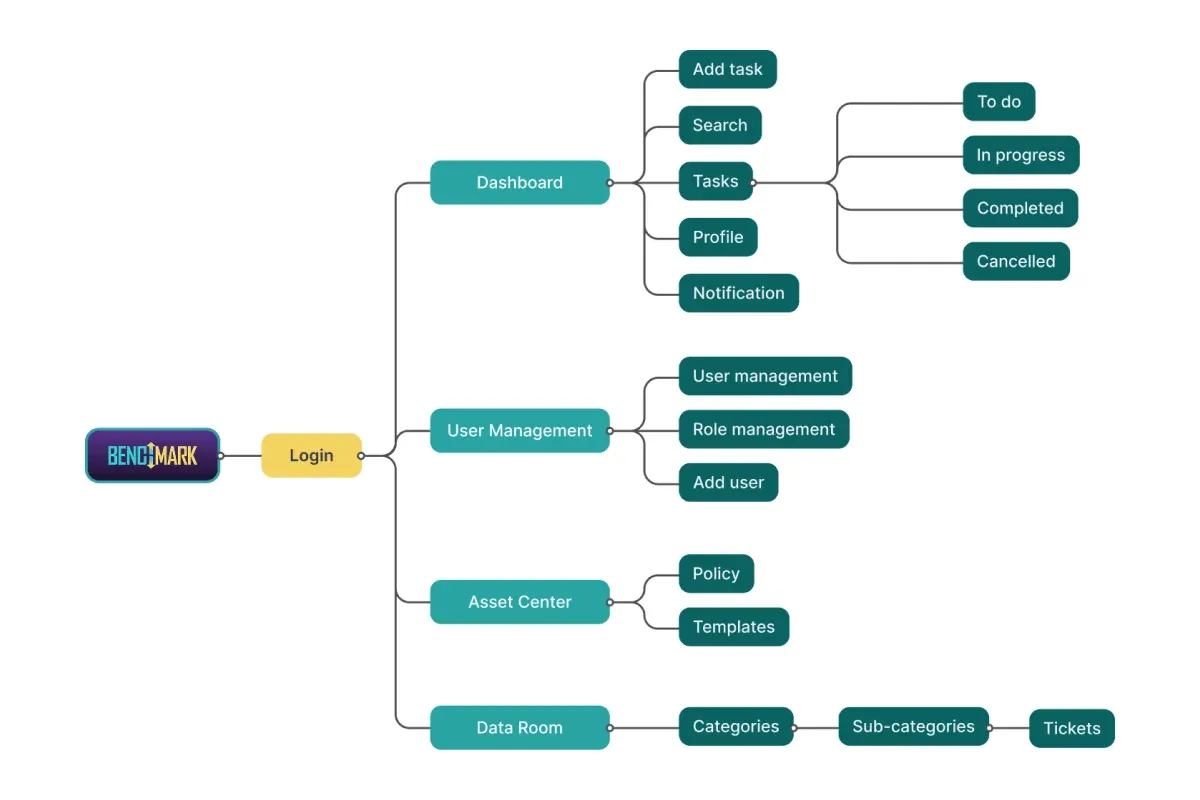
Information architecture
The task lifecycle and the internal/external boundary at every transition.
Solution I proposed
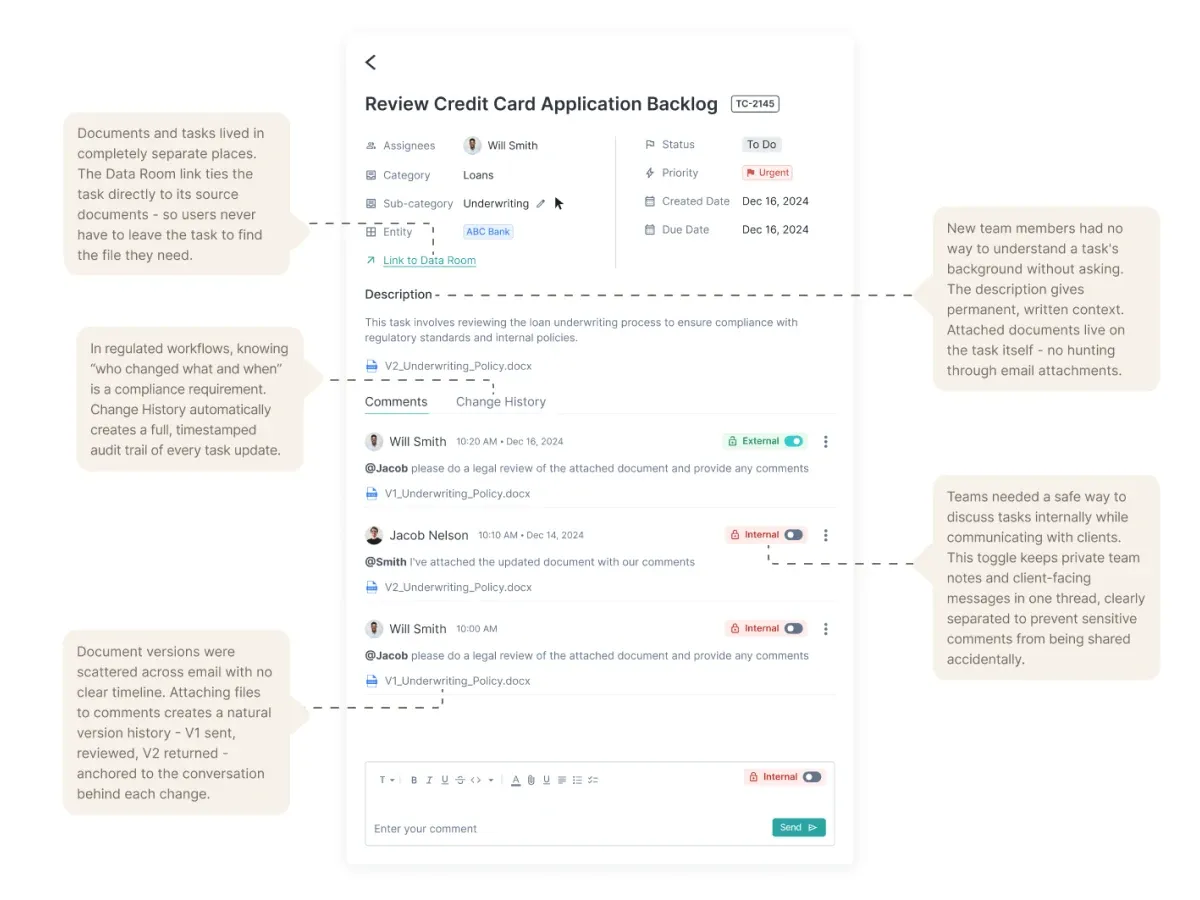
One secure workspace where every task carries its documents, change history, and compliance resources. A privacy toggle keeps internal conversation separate from partner-facing threads, private for internal teams and transparent for partners, and the audit trail builds itself as the work happens.
What changed
The compliance team retired their parallel tracking sheet within the first month. Partnership reviews that previously required three tools now happen in one place. Support tickets dropped by 40%. The audit trail is already there when a regulator asks for it. The application prototype was delivered within the agreed two-week timeline; the full engagement ran seven weeks.
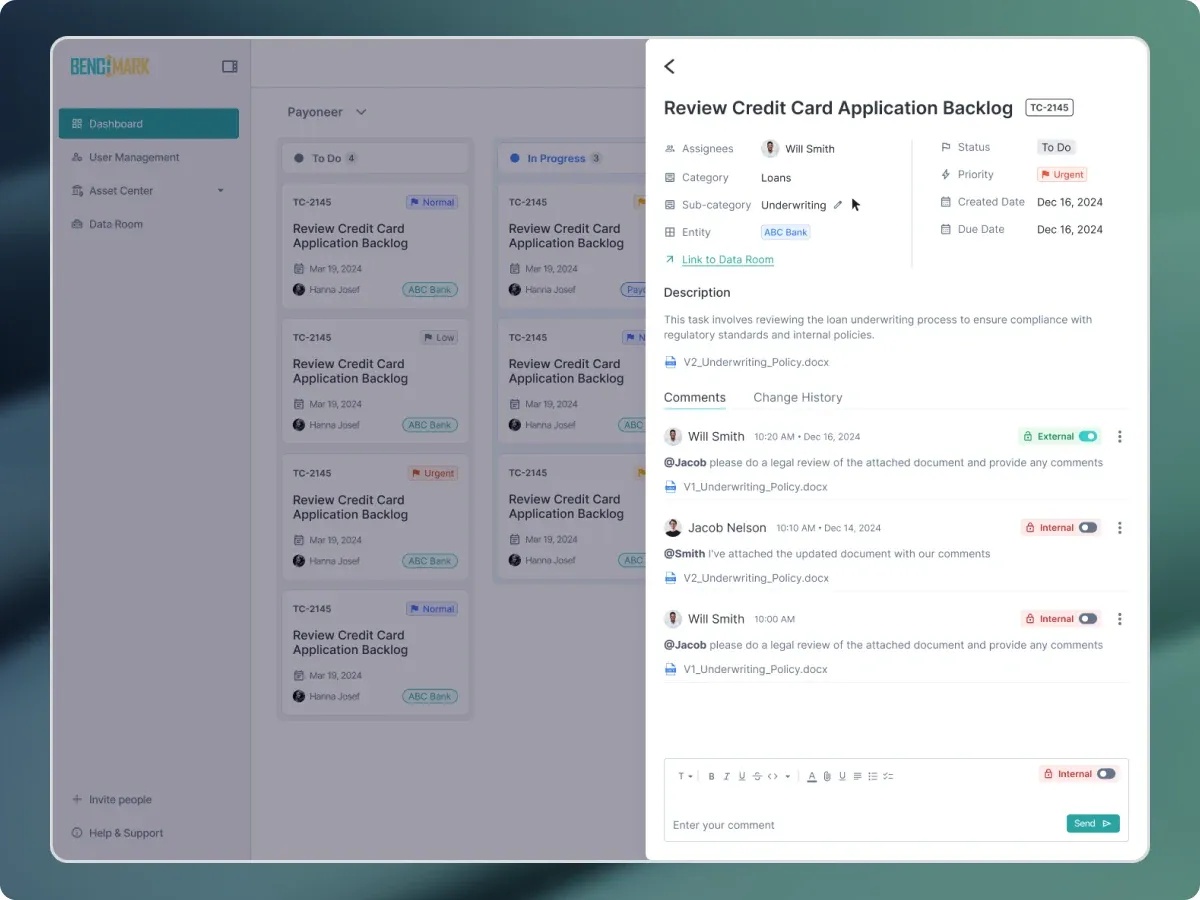
Two-context comments.
A simple privacy toggle keeps every conversation in the right place. Internal for teams, external for partners.
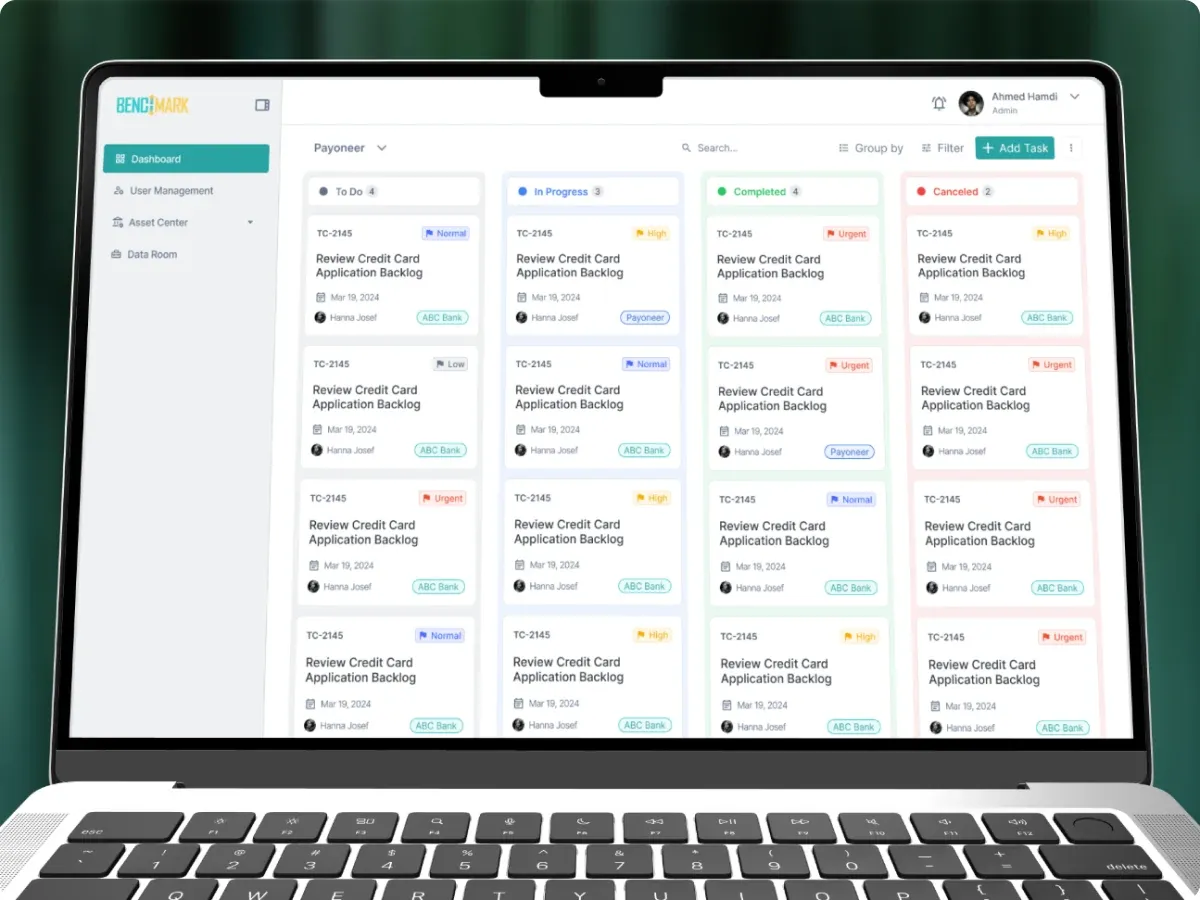
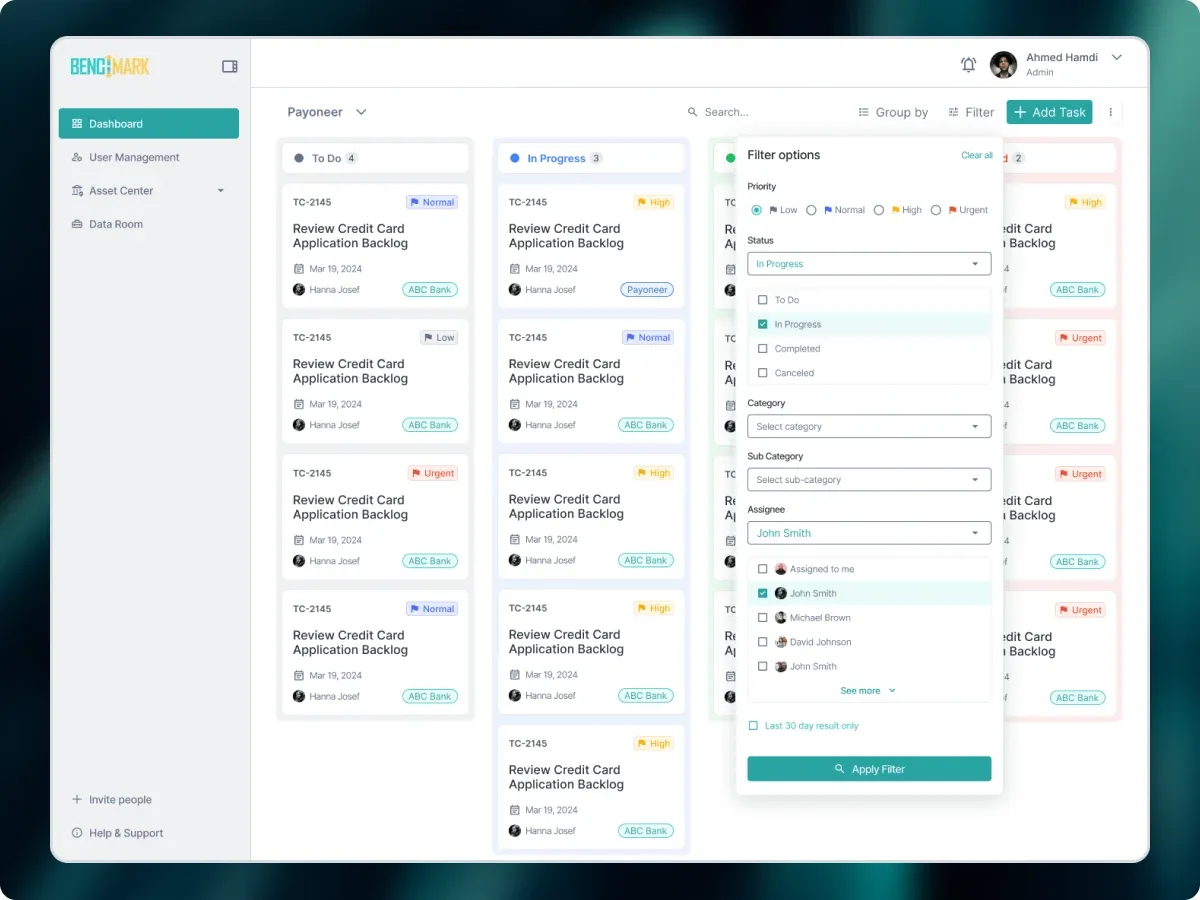
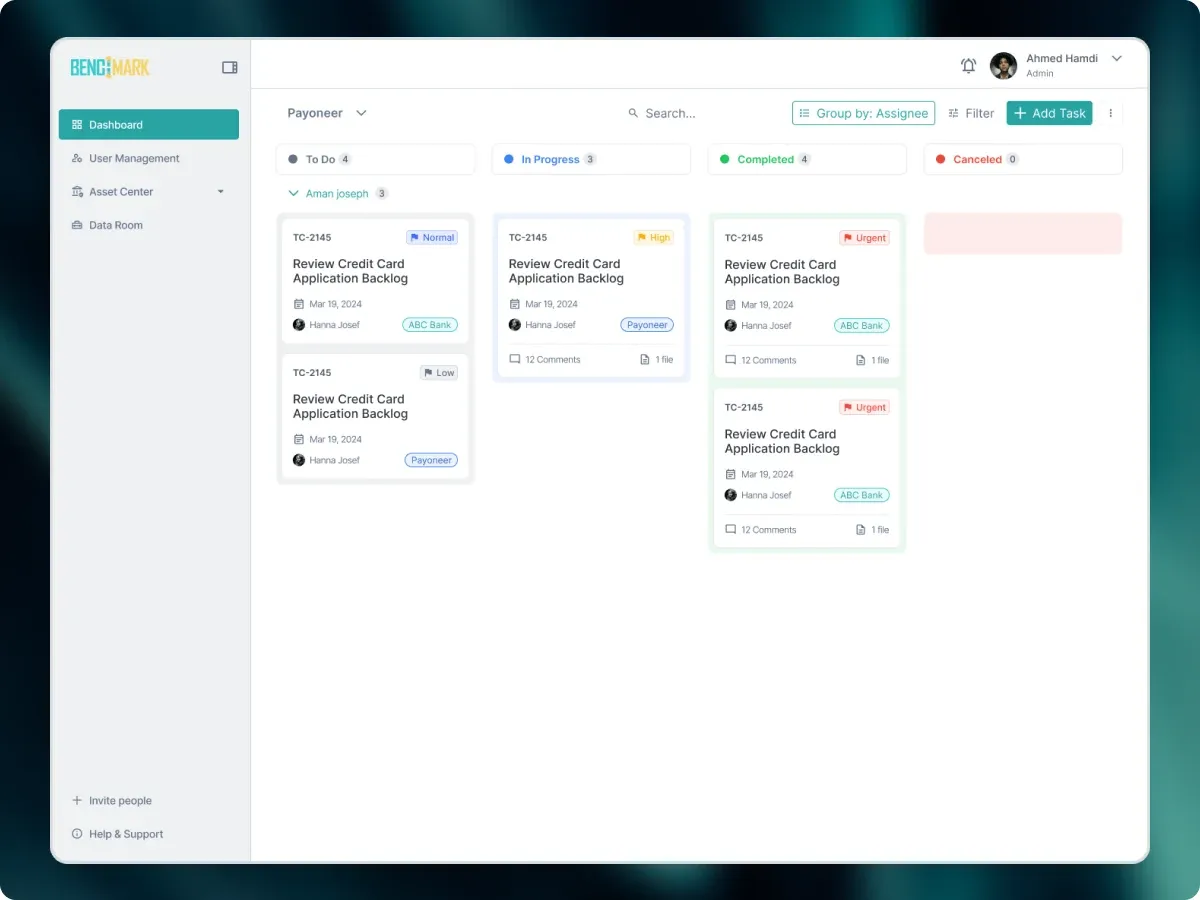
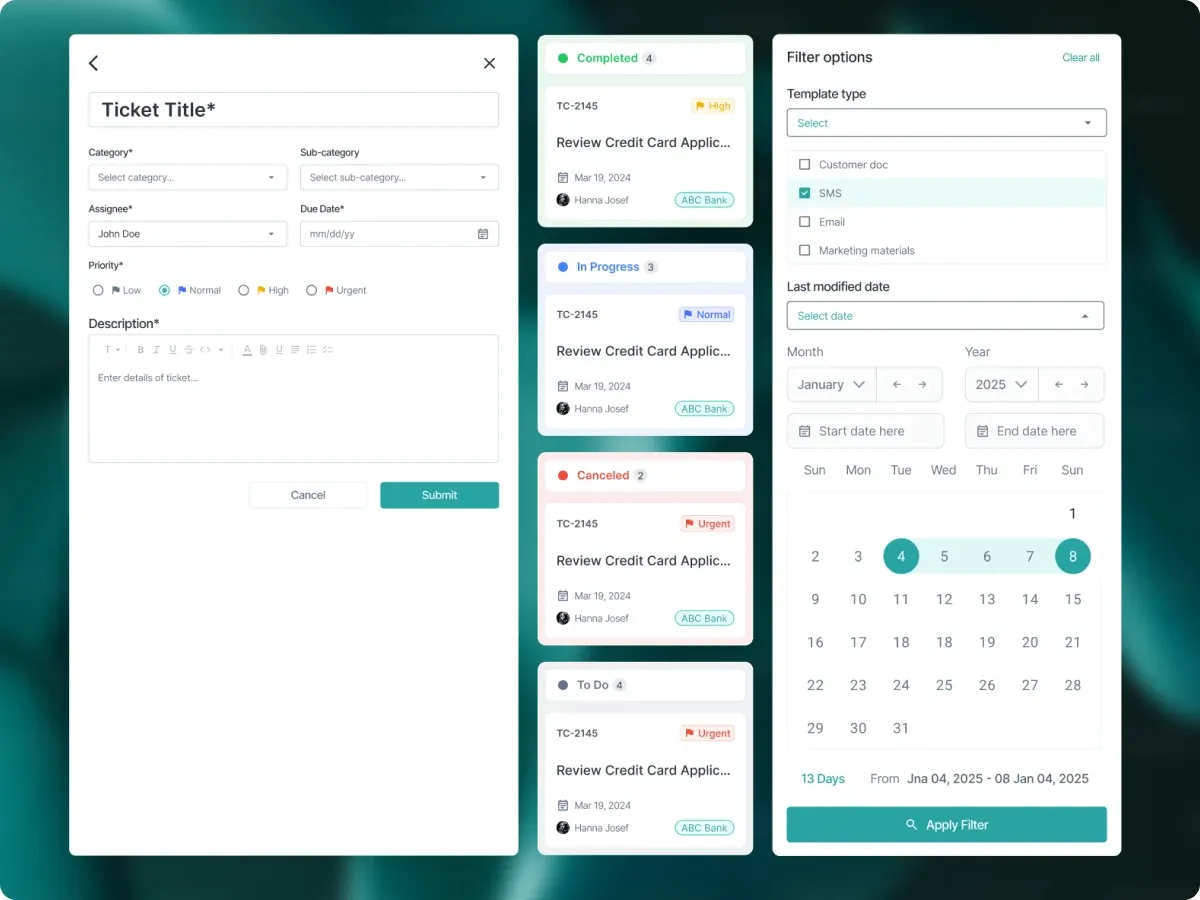
Portfolio kanban.
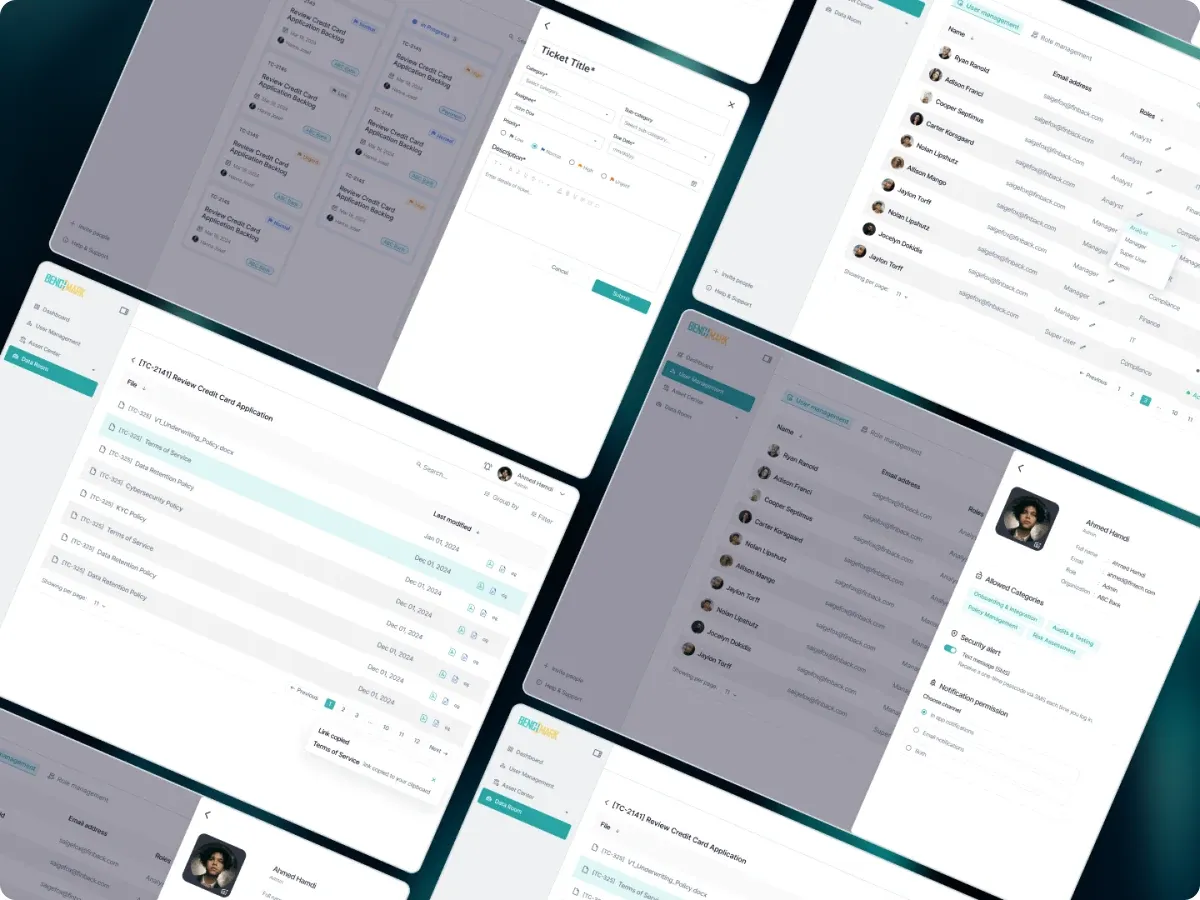
Every task includes the essentials: priority, assignee, due date, and partnership context.
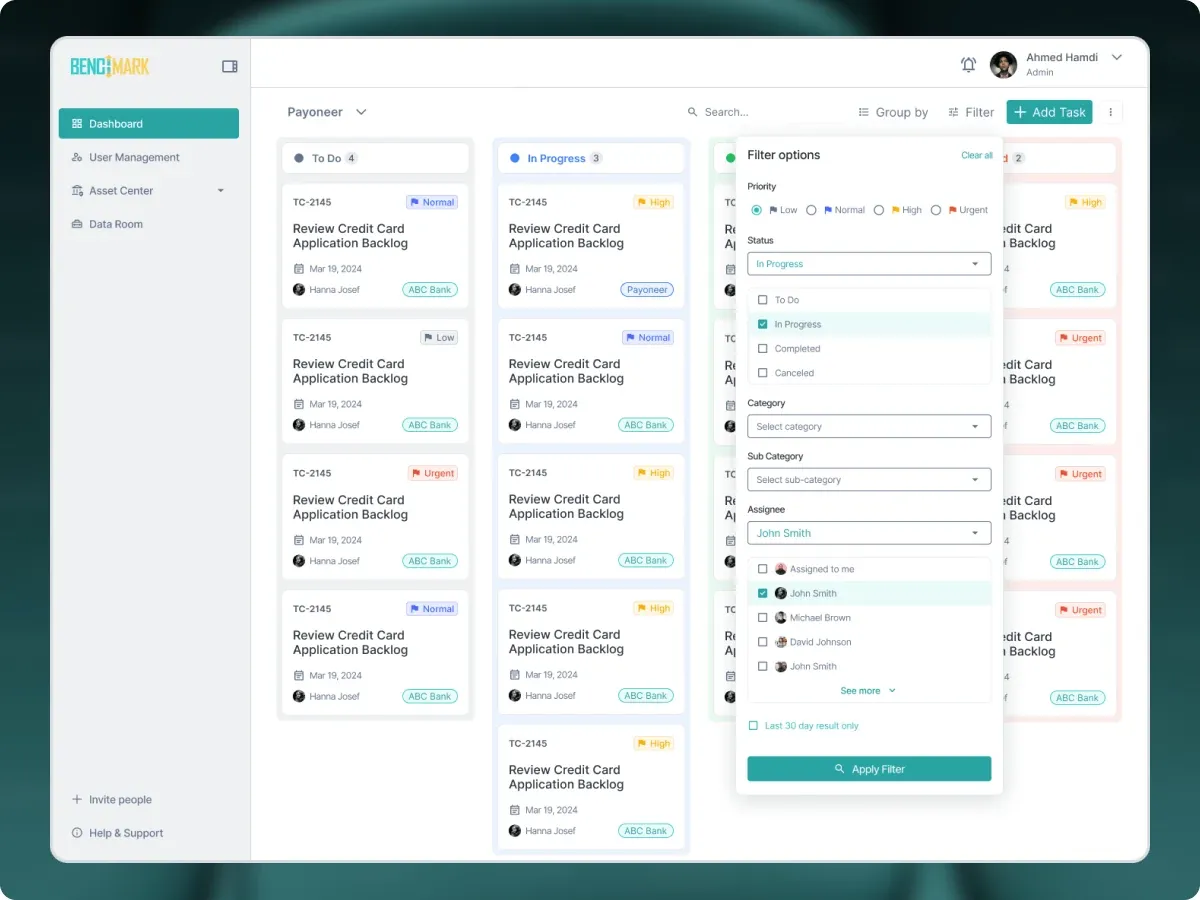
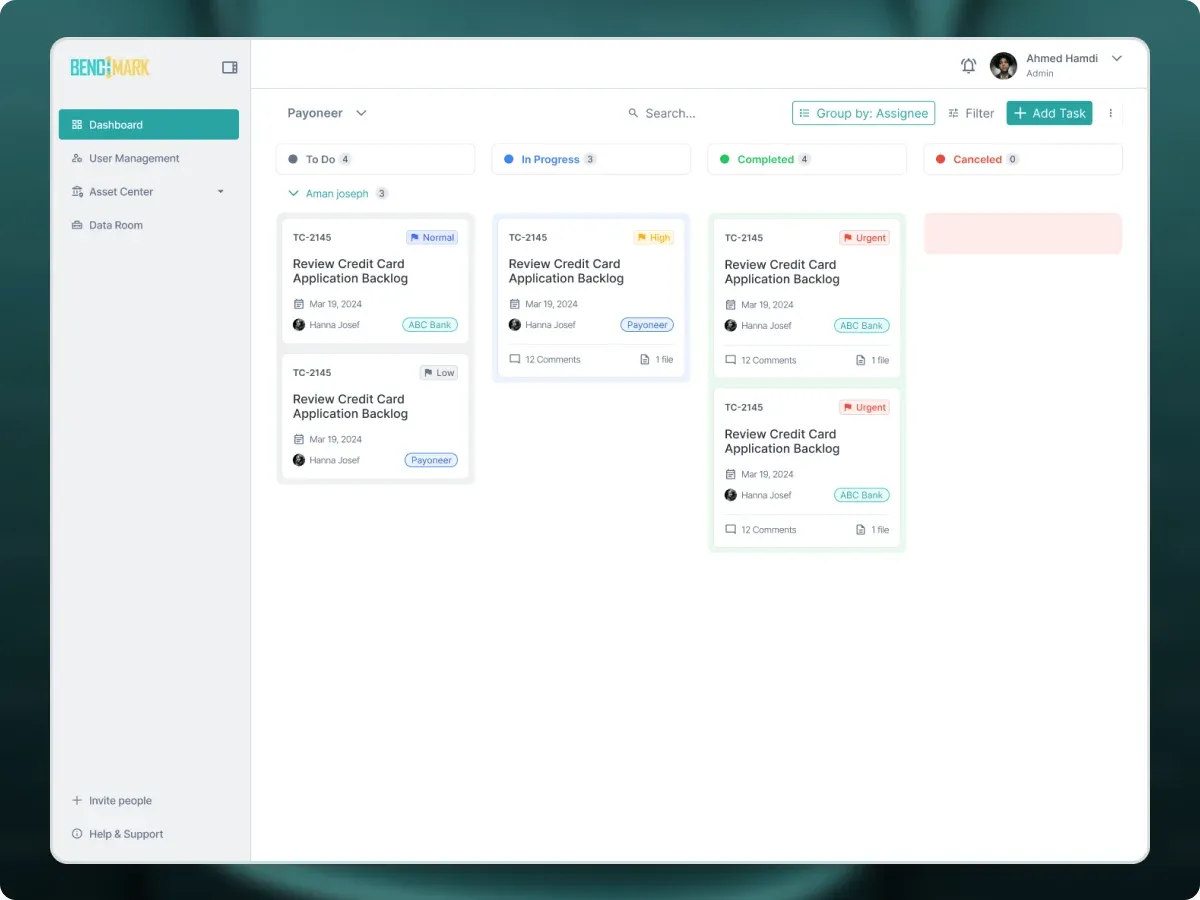
Flat task structure.
More than a checklist, every task connects documents, history, and compliance resources.
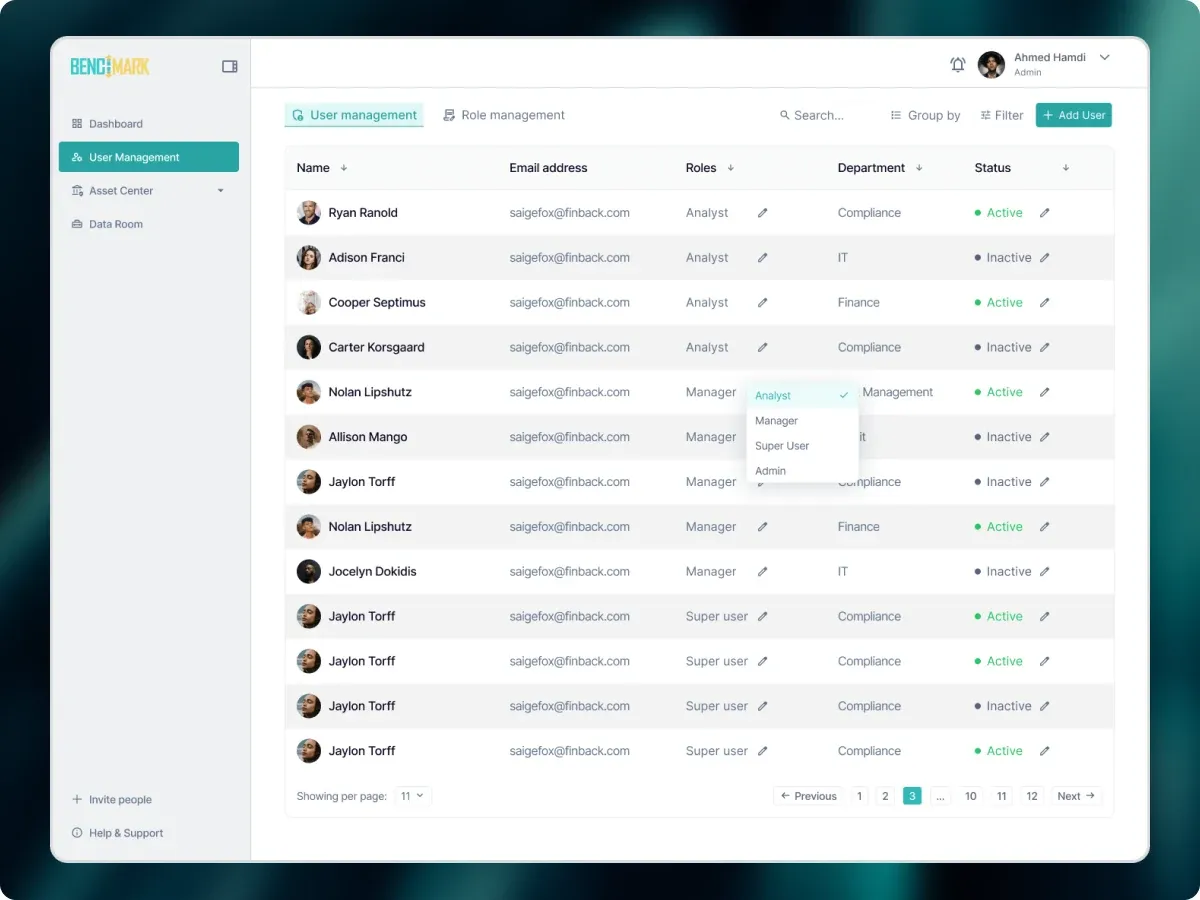
Inline user management.
Manage users directly from the table, with every change just a click away.
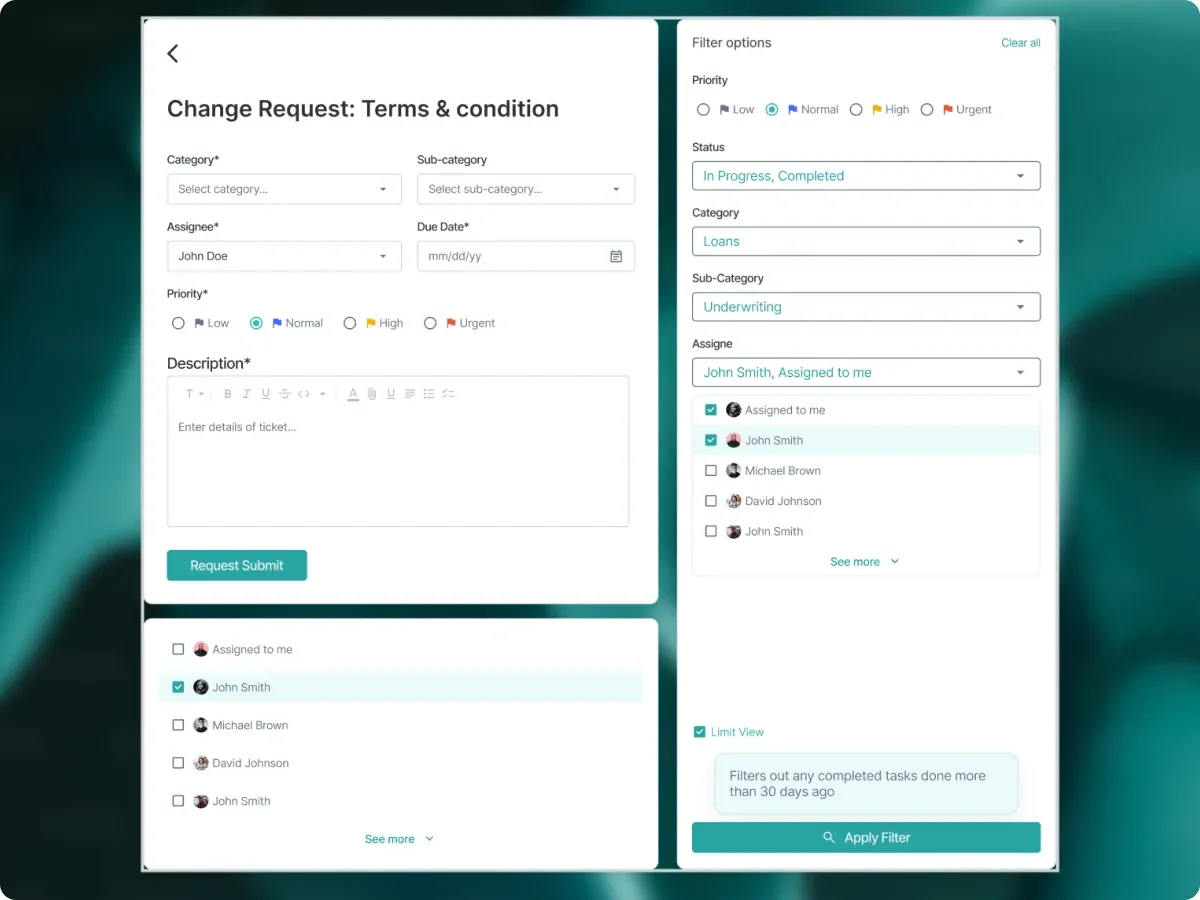
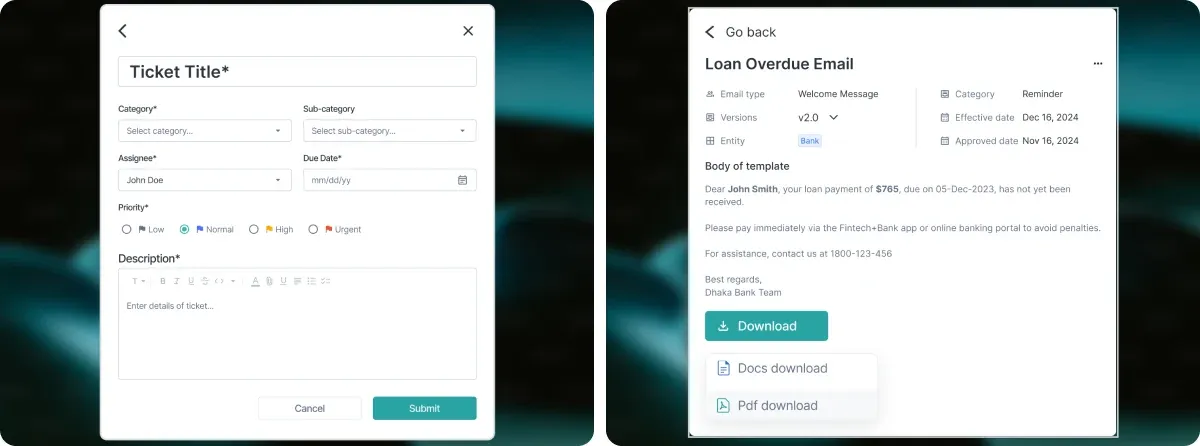
A unified experience across every workflow
Connected workflows, built-in compliance, and a unified design system that keeps the entire platform consistent.
Second time working with Shahriar, and once again he exceeded our expectations. He delivered our application prototype within the agreed two-week timeline. We will absolutely work with him again.
Brianna, CEO, Benchmark